

Esports betting looks straightforward until you’re staring at a match page with three different odds formats, a map handicap you don’t recognize, and live lines moving in real time while the game is being played. Most beginners skip the part where they learn what any of it means and go straight to placing bets based on which team they’ve heard of. That works occasionally and loses money consistently. Understanding how esports odds work before you commit real money isn’t a nice-to-have it’s the difference between making informed decisions and guessing with extra steps. This guide covers everything you need before your first bet, including the parts most introductions skip.
How Esports Odds Work The Foundation Everything Else Builds On?
Odds serve two functions simultaneously: they tell you how much you’ll win, and they encode the bookmaker’s probability estimate for each outcome. Most beginners only pay attention to the first function and miss the second entirely which leads to bets that feel reasonable but are systematically overpriced. Three formats show up on most esports betting platforms. American odds use a plus/minus system a team listed at -150 requires a $150 bet to win $100, while a team at +130 returns $130 profit on a $100 bet. Decimal odds are simpler: multiply your stake by the decimal number to get your total return including stake. A decimal of 2.50 on a $100 bet returns $250 total $150 profit. Fractional odds, common on UK platforms, express profit relative to stake as a fraction. All three formats contain identical information presented differently.
The number that actually matters is the implied probability. A team priced at -150 in American odds has an implied win probability of about 60 percent. A team at +130 implies roughly 43.5 percent. Add both sides of a match together and you’ll get a number above 100 percent that gap is the bookmaker’s margin, typically 4 to 8 percent on major esports markets. That margin is how they profit regardless of outcome. Every bet you place, you’re working against that built-in edge which means you need to be right more often than the implied probability suggests just to break even.
Converting between formats becomes automatic with practice. The useful habit to develop early is checking implied probability before placing any bet not just the payout. A bet at -200 feels safe because the team is heavily favored. But at -200, the implied probability is 66.7 percent. If the team actually wins 60 percent of the time in situations like this, you’re losing money on every bet even though you’re winning most of them.
Reading CSGO Betting Lines The Markets That Matter
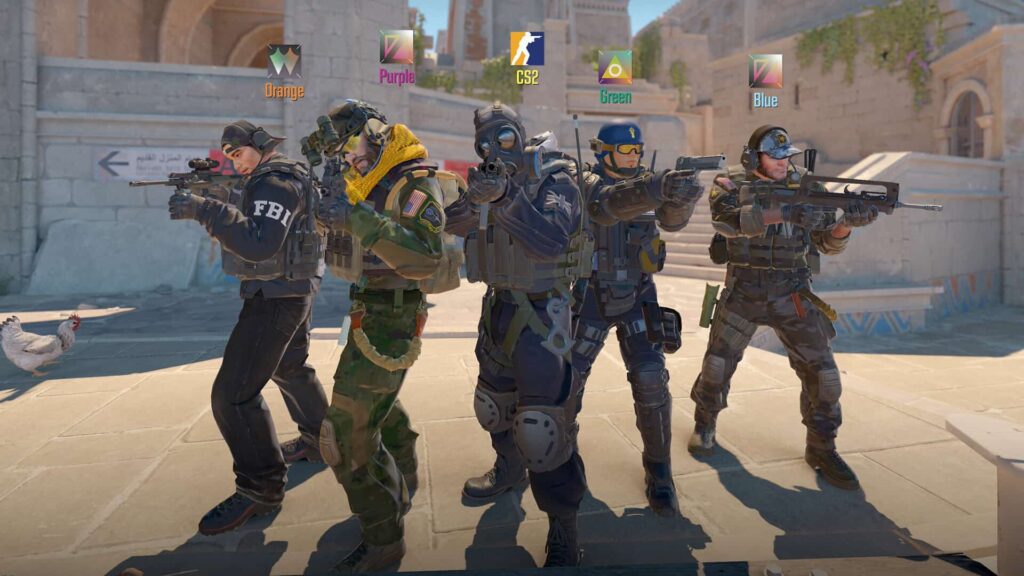
CSGO match betting has more market variety than almost any other esport, which creates both opportunity and confusion for beginners. Understanding the main market types before placing a bet is non-negotiable if you want to make decisions that are actually informed rather than accidental. Match winner is the simplest you pick which team wins the series. For a best-of-three, one team wins two maps before the other does. The odds reflect the bookmaker’s assessment of each team’s overall strength, recent form, map pool depth, and head-to-head record. This is where most beginners start and it’s a reasonable starting point, as long as you understand that the odds already incorporate all publicly available information. Finding value here requires knowing something the market doesn’t which is a higher bar than it sounds.
Map handicap is where CSGO betting gets more strategically interesting. A strong favorite might be priced at -1.5 maps, meaning they need to win 2-0 to cover the handicap a 2-1 series win doesn’t count for handicap purposes. The underdog at +1.5 wins the handicap bet if they take even one map. Handicap markets exist because the implied probability on a heavy favorite in match winner is so compressed that the payout barely justifies the bet. Map handicaps create more balanced odds on one-sided matchups and are often where sharper bettors find more value than in straight match winner.
Total maps played over/under 2.5 is a market that has nothing to do with who wins. You’re betting on whether the series goes to a deciding map or ends in a sweep. A team dominant enough to consistently win 2-0 makes under 2.5 maps interesting regardless of which side you take on the match winner. Teams with deep map pools who force opponents to play their weaker maps tend to produce more 2-1 series. Teams with one dominant map and clear weaknesses produce more decisive outcomes in both directions. These dynamics are worth understanding before betting total maps.
Individual map markets go deeper still first half winner, total rounds, pistol round winner, correct score on individual maps. These are niche markets with higher variance and, on certain platforms, less precise pricing than main markets. For beginners, they’re worth understanding conceptually but carry more risk than map handicap or total maps until you’ve developed a detailed feel for how specific teams play on specific maps.
Why Live Lines Move and What That Signals?
Pre-match odds are set based on available information team rankings, recent results, roster status, map pool data. Live lines move based on what’s actually happening in the match in real time, and in esports they move fast. A team winning the first half of a map comfortably will see their live odds shorten significantly even if the match is far from decided. A key player going on a bad run early in a round can shift lines before most casual viewers have processed what they saw.
Line movement tells you two things simultaneously. First, it reflects genuine in-game information momentum shifts, economy advantages, tactical patterns that suggest how the remaining rounds will play out. Second, it reflects where betting volume is flowing. When sharp bettors those with demonstrated track records move significant money onto a side, platforms adjust lines to limit their exposure. When lines move in a direction that seems counterintuitive given what’s happening on screen, it’s often informed money rather than public sentiment driving the change.
For beginners, live betting in CSGO is genuinely high-risk because the game moves faster than most people can process odds implications in real time. You’re making probability assessments about a game in progress while the game is still in progress and the odds are updating every few seconds. Pre-match betting forces you to do your analysis before the pressure and excitement of a live match affects your judgment. That slower pace is actually a structural advantage for beginners use it.
The Research That Moves the Needle in CSGO Betting

CSGO has more publicly available data than almost any other esport, which is one of the reasons why CSGO betting is more fun with the right knowledge the information asymmetry between an informed bettor and a casual one is significant, and closing that gap is actually achievable with publicly available tools.
HLTV.org is the primary resource. It publishes detailed statistics on every professional match: player ratings, map-specific win rates, head-to-head records going back years, recent form over the last three months versus the last year, performance against top-ten opponents versus lower-ranked teams. The difference between a team’s overall win rate and their win rate on specific maps is one of the most consistently underweighted factors in bookmaker pricing at lower tier levels. Map pool analysis is the research area where recreational bettors can most realistically find an edge. Map vetoes are partially predictable based on team tendencies teams ban their weakest maps and pick their strongest. If you know that Team A’s win rate on Mirage is 71 percent over their last thirty maps and the bookmaker is pricing them as a slight underdog on a map-specific bet, that’s a concrete information advantage. You don’t need to predict the entire match you need to have a better probability estimate than the bookmaker on one specific question.
Roster changes and stand-ins are the variable that moves lines most dramatically and is most often underweighted by bookmakers at the time of announcement. A top-ten team playing with a stand-in for their primary AWPer is a fundamentally different team than their ranking suggests. The AWP role in CSGO is uniquely influential losing a tier-one AWPer and replacing them with a stand-in typically reduces team ceiling significantly in individual map rounds. Bookmakers adjust for this but rarely fully, particularly in the first day after an announcement. Travel and scheduling fatigue matter more than casual observers expect. Teams playing their fourth match in five days at a LAN event, in a different timezone from their practice facility, are not the same team as they were at the start of the tournament. These factors show up in the data if you look at performance curves within tournaments rather than just overall tournament results.
Building Your Process Before Betting Real Money
Paper betting tracking hypothetical bets without real money sounds like a waste of time until you do it for a month and see how your actual record compares to your confidence level going into each bet. Most people discover they were far more confident in their picks than their accuracy justified. The gap between confidence and accuracy is expensive when real money is involved and free to discover when it isn’t.
Track every bet you would have placed: the match, the market, the odds, the stake size, the reasoning, the result. After 50 bets you have data. After 100 bets you have meaningful data. You can see which markets you perform best in, whether you’re identifying genuine value or just backing favorites with slightly different framing, and whether your research process actually translates into better predictions. Without tracking, you’re operating on a subjective sense of your own performance that almost always skews positive.
Start with one game, one tier of competition, one or two market types. CSGO tier-one matches on HLTV with map handicap as your primary market is a narrower focus than most beginners want and exactly the kind of specificity that produces learnable patterns. Spreading attention across multiple esports, multiple tiers, and multiple market types in the first months produces shallow engagement with all of them and deep understanding of none.
Understand betting lines fully before placing your first real bet. Know what implied probability means and how to calculate it. Know what the vig costs you over time. Know the difference between map handicap and match winner and why the same match can offer different value in different markets. The bettors who get genuinely good at reading CSGO match betting lines are almost never the ones who jumped in with confidence and large stakes early. They’re the ones who treated the learning phase as seriously as the betting phase because at the beginning, it absolutely is.